
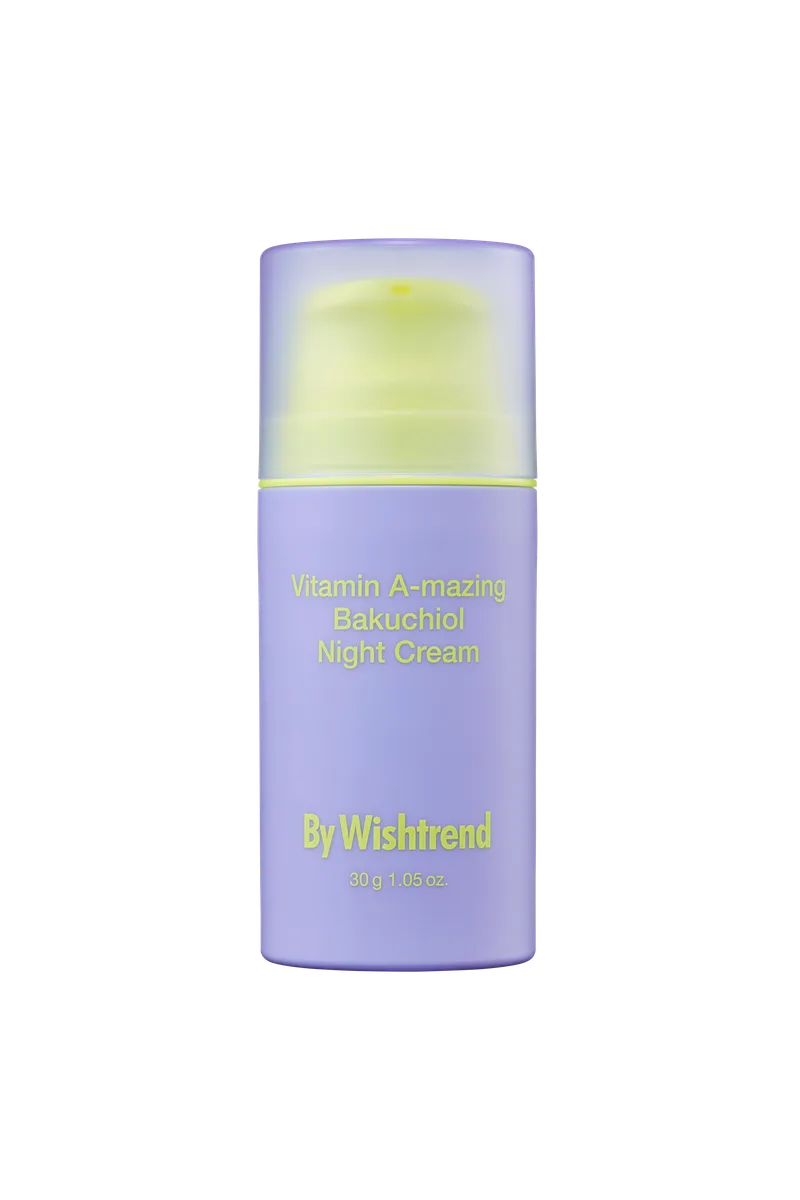
By Wishtrend
A-Amazing Bakuchiol Night Cream
A hydrating moisturizer by By Wishtrend — featuring Niacinamide (reduces redness) and Bakuchiol (smooths fine lines).
42 of 42 ingredients identified
Informational only — check the packaging and a professional for advice.
Barrier-support ingredients present
Ceramide NP help reinforce the skin barrier.
Category breakdown
Humectant · 13Emollient · 9Active · 5Solvent / vehicle · 4Surfactant · 3Antioxidant · 3Preservative · 2Other · 1Soothing · 1Barrier support · 1
Relationships
Works well together
Glycerin + Hyaluronic AcidGlycerin + Ceramide NPNiacinamide + Hyaluronic AcidGlyceryl Glucoside + Hyaluronic AcidGlyceryl Glucoside + NiacinamideBakuchiol + NiacinamideTrehalose + Hyaluronic AcidHydroxyacetophenone + TocopherolHydroxyacetophenone + NiacinamideAdenosine + NiacinamideAdenosine + Hyaluronic AcidSodium Hyaluronate + NiacinamideSodium Hyaluronate + GlycerinRetinal + NiacinamideRetinal + Ceramide NPBeta-Glucan + Hyaluronic AcidBeta-Glucan + NiacinamideCentella Asiatica + NiacinamideCeramide NP + NiacinamidePalmitoyl Tripeptide-8 + NiacinamidePalmitoyl Tripeptide-8 + Centella AsiaticaDextran + Hyaluronic AcidDextran + Sodium HyaluronateDextran + Glycerin
Full ingredient breakdown
2
A gold-standard humectant that draws water into the skin.
5
A gentle humectant derived from sugar beets.
10
A versatile vitamin B3 derivative with multiple benefits.
11
A glucose-based humectant that hydrates and supports the skin's own moisture-management systems.
13
A plant-derived ingredient with retinol-like benefits and less irritation.
14
A sugar-based humectant that holds water and helps skin resist dehydration stress.
21
A multifunctional antioxidant that calms skin and enhances the performance of preservative systems.
22
An extract from the brown seaweed Laminaria japonica (Japanese kelp), rich in polysaccharides and minerals, used for hydration, antioxidant protection, and skin conditioning.
23
An extract specifically from the leaves of Eclipta prostrata (false daisy/bhringraj), rich in antioxidant flavonoids and wedelolactone; distinct from the general Eclipta Prostrata Extract.
26
A nucleoside used at low concentrations to help smooth the look of fine lines; a common K-beauty anti-aging active.
27
A simple sugar humectant that draws moisture into the skin and serves as a substrate for skin-microbiome-friendly formulations.
28
Short-chain fructose polymers used in cosmetics as humectants and prebiotics to hydrate skin and support a balanced microbiome.
30
The salt form of hyaluronic acid; penetrates more readily.
31
A more potent retinoid one step closer to retinoic acid than retinol.
33
A polysaccharide humectant that hydrates and calms; often compared to hyaluronic acid.
34
A humectant that can hold many times its weight in water.
35
A calming botanical (cica) prized for soothing stressed skin.
36
An extract from the fruit of the common fig (Ficus carica) used for its humectant and antioxidant properties, contributing to skin softness and hydration.
37
A skin-identical lipid that rebuilds the barrier.
38
Vitamin E; a lipid-soluble antioxidant that also conditions skin.
39
Undissolved native collagen protein used in cosmetics as a humectant and film-former that conditions the skin surface; distinct from hydrolyzed or soluble collagen forms.
41
A palmitoylated synthetic tripeptide that mimics the anti-inflammatory signaling domain of alpha-melanocyte-stimulating hormone (α-MSH). Activates melanocortin MC-1R receptors on keratinocytes and immune cells, triggering the same anti-inflammatory cascade as the endogenous neuropeptide. Used in Dr. Jart+ Cicapair formulas and other K-beauty calming products for its potent yet gentle anti-inflammatory and sensitivity-reducing properties.
42
A branched polysaccharide of α-D-glucose units primarily linked α(1→6), produced by fermentation of Leuconostoc mesenteroides. Distinct from dextrin (a partially hydrolyzed starch). In cosmetics, dextran forms a hydrophilic film on skin surfaces, providing temporary plumping, hydration retention, and a silky skin feel. Used in premium serums and masks for its biopolymer moisturizing and film-forming properties.