
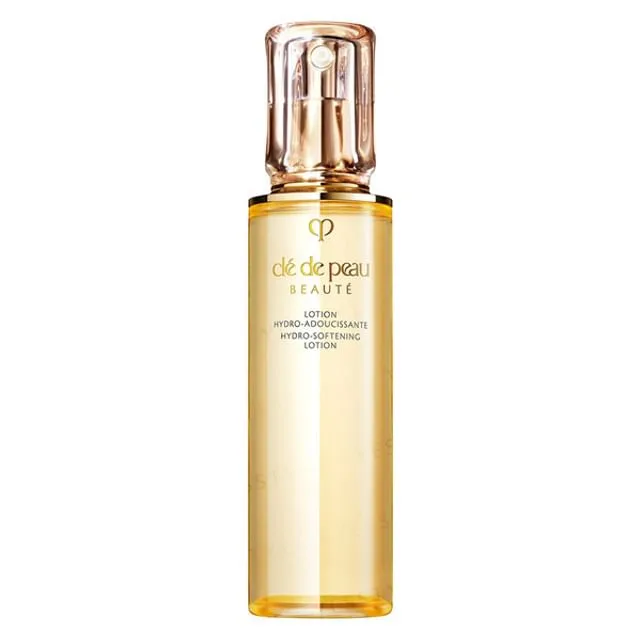
Clé de Peau Beauté
Hydro-Softening Lotion
My skin feels noticeably softer and more hydrated after using this—it's become my go-to for quenching dry patches and keeping everything supple throughout the day.
36 of 36 ingredients identified
Informational only — check the packaging and a professional for advice.
Actives combined with exfoliation
This formula pairs active ingredients with exfoliation. Introduce gradually and watch for sensitivity.
Contains fragrance
Fragrance is a common trigger for sensitivity and irritation in reactive skin.
Category breakdown
Humectant · 13Antioxidant · 5Solvent / vehicle · 4Other · 4Soothing · 3Active · 2Emollient · 2Exfoliant · 1Preservative · 1Fragrance · 1
Relationships
Works well together
Hydrolyzed Conchiolin Protein + Sodium Acetylated HyaluronateHydrolyzed Conchiolin Protein + TrehaloseL-Theanine + Dipotassium GlycyrrhizatePEG-30 + GlycerinPEG-30 + Butylene GlycolPEG-20 Methyl Glucose + GlycerinSodium Hyaluronate + GlycerinTremella Fuciformis Polysaccharide + GlycerinPrunus Serrulata Leaf Extract + Tranexamic AcidPEG-30 Phytosterol + Hydrogenated LecithinTrisodium EDTA + Disodium EDTATrisodium EDTA + Phenoxyethanol
Full ingredient breakdown
1
A brightening active particularly effective on stubborn pigmentation.
2
A licorice-root-derived salt that calms inflammation and soothes irritated, reactive skin.
3
A silk-derived protein extract that hydrates and imparts a smooth, conditioned feel.
4
A hydrolysate of conchiolin, the structural protein from pearl/nacre (Pinctada spp.). Used in luxury Japanese skincare for its moisturising, conditioning, and film-forming properties.
5
An amino acid found naturally in green tea leaves that calms skin sensitivity and reduces inflammatory responses. Used in d program and other Japanese formulations targeting reactive or allergy-prone skin.
6
A Japanese angelica root extract that soothes skin and offers antioxidant support.
7
An extract from perilla (shiso) leaves in the mint family, rich in rosmarinic acid and flavonoids, used in K-beauty for antioxidant and soothing benefits.
11
A gold-standard humectant that draws water into the skin.
13
A mid-chain polyethylene glycol used as a humectant and solvent in skincare. PEG-30 is water-soluble and helps retain moisture while improving product texture.
14
A sugar-based humectant that holds water and helps skin resist dehydration stress.
15
A methyl glucose ether modified with 20 ethylene oxide units. Functions as a water-soluble humectant and emollient. Provides a silky skin feel in toners and essences.
17
A small sugar alcohol that acts as a humectant, drawing water into the skin.
19
The salt form of hyaluronic acid; penetrates more readily.
21
An AHA most often used in small amounts to adjust pH.
22
A high-molecular-weight polysaccharide extracted from Tremella fuciformis (snow mushroom), often marketed as a natural alternative to hyaluronic acid due to its exceptional water-binding capacity and film-forming properties.
23
A plant-derived sugar alcohol that hydrates skin and supports its moisture barrier.
24
A naturally occurring amino acid that functions as a humectant and is a component of the skin's natural moisturizing factor.
25
The simplest amino acid, used as a humectant that supports the skin's natural moisturizing factor.
26
A stable, gentle vitamin C derivative that brightens and provides antioxidant support.
27
A skullcap root extract rich in baicalin flavonoids with potent antioxidant and soothing action.
28
The aqueous distillate (hydrosol) of rosemary leaves. Contains water-soluble antioxidant phytochemicals including rosmarinic acid. Milder than rosemary essential oil but retains conditioning and antioxidant benefits.
29
An acetylated form of sodium hyaluronate with enhanced surface-binding properties that provides long-lasting, film-forming hydration.
30
Extract from the leaves of Prunus serrulata (Japanese cherry, Sakura), a culturally significant tree in Japan. Contains sakuranetol, coumarin derivatives, and antioxidant polyphenols. Used for its antioxidant and skin-conditioning properties.
31
A simple monosaccharide sugar used in cosmetics as a humectant to attract and retain moisture in the skin.