
Elixir
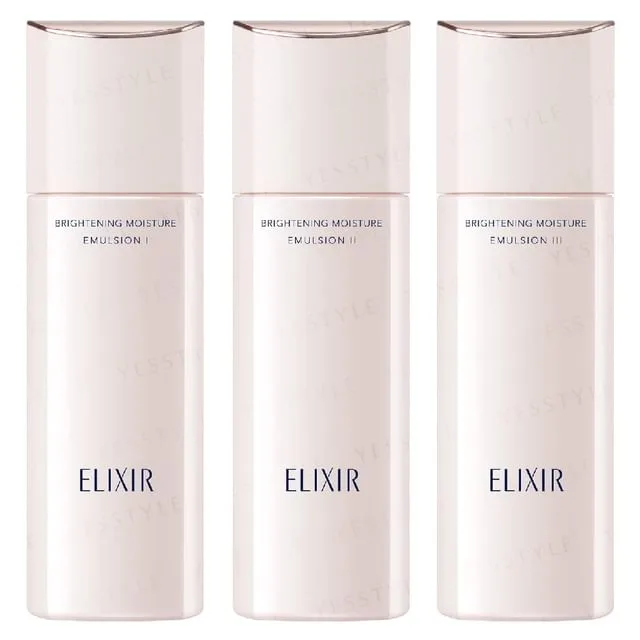
Brightening Moisture Lotion WT II
A hydrating lotion by Elixir — featuring Potassium Methoxysalicylate (brightens hyperpigmentation) and 2-O-Ethyl Ascorbic Acid (stable vitamin c derivative…).
35 of 35 ingredients identified
Informational only — check the packaging and a professional for advice.
Contains fragrance
Fragrance is a common trigger for sensitivity and irritation in reactive skin.
Category breakdown
Humectant · 9Other · 9Soothing · 4Solvent / vehicle · 4Antioxidant · 3Active · 2Fragrance · 2Surfactant · 1Preservative · 1
Relationships
Full ingredient breakdown
1
A potassium salt of 4-methoxysalicylic acid used as a regulated skin-whitening active in Japanese cosmetics (quasi-drug status). Inhibits melanogenesis and has mild exfoliating properties. Requires daily sun protection.
2
A licorice-root-derived salt that calms inflammation and soothes irritated, reactive skin.
3
An extract from Hypericum erectum (Japanese St. John's Wort). Contains hypericin, pseudohypericin, and quercetin derivatives with antioxidant and soothing properties. Widely used in Elixir and other Shiseido brands.
4
Extract from Melilotus officinalis (yellow sweet clover). Contains coumarin compounds and flavonoids that provide anti-inflammatory and vascular-supporting properties. Used in Japanese toners and emulsions for skin-soothing.
5
A protein hydrolysate from pearl/shell conchiolin used as a moisturizing, film-forming conditioning agent in Japanese formulas.
6
An extract from olive (Olea europaea) leaves, rich in oleuropein, hydroxytyrosol, and flavonoids. Provides potent antioxidant, anti-inflammatory, and mild antimicrobial benefits in skincare.
7
Job's Tears (hatomugi) seed extract, a staple J-beauty botanical valued for calming, hydrating and mild brightening effects on dull or rough skin.
8
A naturally occurring amino acid that acts as a humectant and supports the skin's own moisture-retention system.
9
Extract from Nasturtium officinale (watercress), an aquatic cruciferous plant. Rich in glucosinolates that convert to bioactive isothiocyanates, plus significant vitamin C and carotenoid content.
10
A naturally occurring cyclohexane polyol (commonly myo-inositol) found in cell membranes, used in cosmetics as a humectant and skin-conditioning agent.
11
A water-soluble form of collagen that hydrates and forms a smoothing film on the skin's surface.
14
A gold-standard humectant that draws water into the skin.
17
A short-chain polyethylene glycol used as a humectant and solvent to hydrate skin and improve the feel and spreadability of formulas.
19
A dimer of glycerin used as a humectant; provides hydration with a slightly richer, more substantive feel than glycerin.
24
A small sugar alcohol that acts as a humectant, drawing water into the skin.
25
An ether derivative of L-ascorbic acid in which the 3-OH position is protected by an ethyl group, making it stable in water-based formulas. Converts to Vitamin C inside skin cells. Used widely in Japanese brightening products (Shiseido, Elixir) as a quasi-drug-adjacent brightening active.
30
The hydrochloride salt of the essential amino acid lysine, used in cosmetics as a humectant and skin-conditioning agent that also supports collagen production.
31
An extract of wormwood (Artemisia absinthium) used in cosmetics for its soothing, antioxidant, and antimicrobial properties.