
Hada Labo
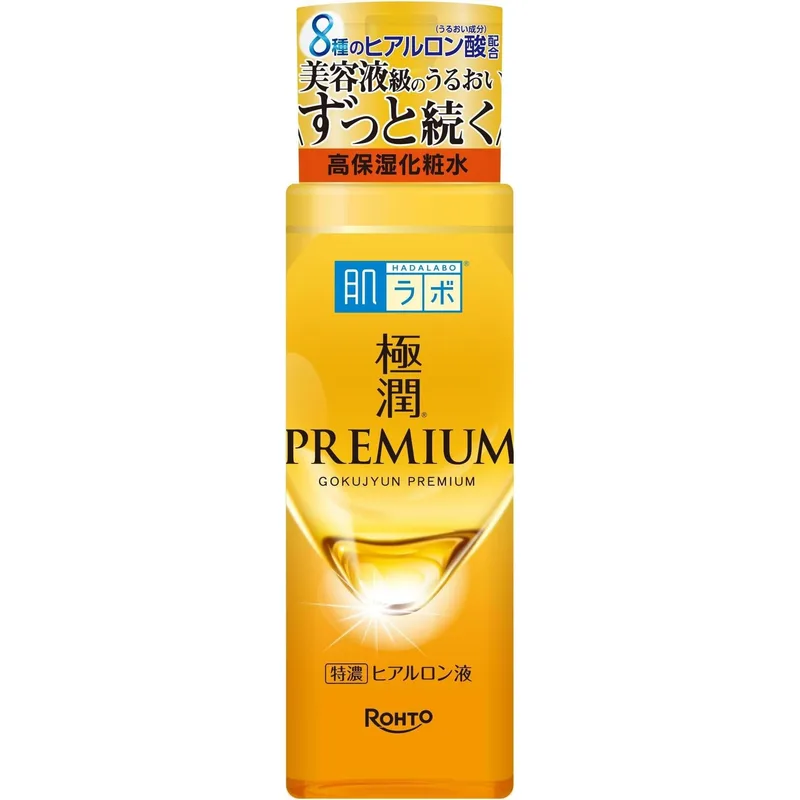
Gokujyun Premium Lotion
A hydrating toner by Hada Labo, built around 20 hydrating ingredients.
37 of 37 ingredients identified
Informational only — check the packaging and a professional for advice.
Category breakdown
Humectant · 20Other · 9Solvent / vehicle · 4Preservative · 3Emollient · 1
Relationships
Works well together
Xylitylglucoside + XylitolXylitol + Hyaluronic AcidSodium Hyaluronate + GlycerinHydrolyzed C12-13 Alkyl Glyceryl Hyaluronate + Sodium HyaluronateHydrolyzed C12-13 Alkyl Glyceryl Hyaluronate + GlycerinHyaluronic Acid + GlycerinAphanothece Sacrum Exopolysaccharides + Sodium HyaluronatePEG-32 + GlycerinPEG-32 + Butylene Glycol
Full ingredient breakdown
2
A gentle urea-derived humectant that hydrates without the roughness of high-dose urea.
3
A sugar alcohol humectant derived from glucose that draws moisture into the skin and improves product texture.
4
A glucoside of xylitol used as a humectant, typically combined with anhydroxylitol and xylitol in the Actimoist moisturizing complex.
5
A cationic quaternary-ammonium derivative of hyaluronic acid that binds electrostatically to negatively charged skin proteins, delivering sustained surface hydration.
7
A plant-derived sugar alcohol that hydrates skin and supports its moisture barrier.
9
The salt form of hyaluronic acid; penetrates more readily.
10
A dimer of glycerin used as a humectant; provides hydration with a slightly richer, more substantive feel than glycerin.
12
A ferment filtrate produced by culturing Lactococcus bacteria on a hyaluronic acid substrate, yielding a humectant ingredient that hydrates and smooths the skin.
13
A modified hyaluronic acid where C12-13 alkyl glyceryl groups are attached via hydrolysis, creating an oil-dispersible form with improved skin penetration.
14
Enzymatically hydrolyzed sodium hyaluronate with very low molecular weight for deeper skin penetration and enhanced hydration.
16
A glucosylated trehalose produced enzymatically from hydrolyzed starch, used as a humectant, film-former, and emulsion stabilizer in moisturizing formulas.
17
A mixture of polyols (sorbitol, maltitol, and longer-chain sugar alcohols) obtained by hydrogenation of starch hydrolysate, used as a humectant and skin-conditioning agent.
18
A propoxylated methyl glucose ether used as a mild humectant and skin conditioner in toners, essences, and lotions, imparting a smooth, non-greasy hydration.
22
A humectant that can hold many times its weight in water.
24
An acetylated form of sodium hyaluronate with enhanced surface-binding properties that provides long-lasting, film-forming hydration.
25
Exopolysaccharides secreted by Aphanothece sacrum (suizenji-nori), a blue-green algae traditionally found in Kyushu, Japan. The polysaccharide forms a gel-like hydrating film with strong moisturizing properties.
26
A crosslinked form of sodium hyaluronate that creates a hydrating matrix on skin for enhanced, sustained moisture retention.
27
A medium-chain polyethylene glycol (MW ~1450 Da) that acts as a humectant, solvent, and consistency agent in lotions and creams. Well-tolerated; used in Japanese toners and emulsions.
28
A medium-chain polyethylene glycol used as a humectant and solvent that helps retain moisture and improve formula texture.
29
A gold-standard humectant that draws water into the skin.