
Missha
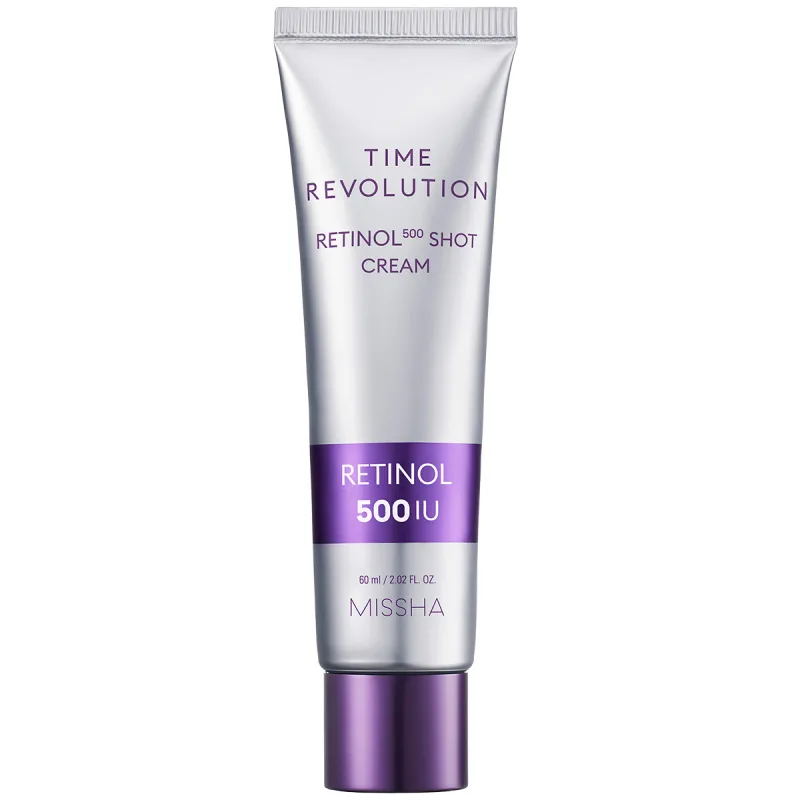
Time Revolution Retinol 500 Shot
A ampoule by Missha — featuring Niacinamide (reduces redness) and Adenosine (helps smooth fine lines).
60 of 60 ingredients identified
Informational only — check the packaging and a professional for advice.
Barrier-support ingredients present
Brassica Campestris (Rapeseed) Sterols, Cholesterol, Chitosan, Ceramide NP help reinforce the skin barrier.
Contains fragrance
Fragrance is a common trigger for sensitivity and irritation in reactive skin.
Category breakdown
Fragrance · 9Soothing · 7Other · 7Solvent / vehicle · 6Active · 6Humectant · 5Surfactant · 5Emollient · 5Antioxidant · 4Barrier support · 4Preservative · 2
Relationships
Works well together
Glycerin + Hyaluronic AcidGlycerin + Ceramide NPNiacinamide + Hyaluronic AcidNiacinamide + RetinolBifida Ferment Lysate + NiacinamideAdenosine + NiacinamideAdenosine + Hyaluronic AcidRetinol + Ceramide NPRetinol + Hyaluronic AcidGlucosylrutin + NiacinamideSodium Hyaluronate + NiacinamideSodium Hyaluronate + GlycerinCholesterol + Ceramide NPBeta-Glucan + Hyaluronic AcidBeta-Glucan + NiacinamideChitosan + PanthenolChitosan + Ceramide NPChitosan + Beta-GlucanTris(Tetramethylhydroxypiperidinol) Citrate + RetinolTris(Tetramethylhydroxypiperidinol) Citrate + TocopherolCeramide NP + NiacinamideMarine Elastin + Hyaluronic Acid
Full ingredient breakdown
2
A gold-standard humectant that draws water into the skin.
7
A versatile vitamin B3 derivative with multiple benefits.
8
Pro-vitamin B5 that soothes and hydrates.
10
A probiotic-derived ferment lysate that supports the skin barrier and protects against oxidative stress.
15
A nucleoside used at low concentrations to help smooth the look of fine lines; a common K-beauty anti-aging active.
20
A vitamin A derivative that accelerates cell turnover.
22
Glucosylrutin is rutin (a flavonoid glycoside: quercetin-3-rutinoside) with one or more glucose units attached via enzymatic transglucosylation, producing a more water-soluble derivative. The modification preserves the antioxidant and vascular-protective activity of rutin while enabling its use in aqueous cosmetic formulas where native rutin is poorly soluble. Used in K-beauty serums as a gentle antioxidant and anti-redness active.
23
The salt form of hyaluronic acid; penetrates more readily.
25
Phytosterols derived from rapeseed that reinforce the skin's lipid barrier by filling intercellular gaps and reducing transepidermal water loss.
28
A key barrier lipid that works synergistically with ceramides.
31
A polysaccharide humectant that hydrates and calms; often compared to hyaluronic acid.
34
A hindered phenol antioxidant (Irganox 1010) used at very low concentrations to protect oils and fats in cosmetic formulas from oxidative degradation.
36
A cell-free filtrate obtained from Bifidobacterium fermentation, distinct from bifida ferment lysate in that it contains only secreted metabolites and exopolysaccharides without cellular debris, used for barrier reinforcement and soothing.
37
A postbiotic ferment used to support the skin microbiome and barrier.
38
A postbiotic ingredient produced by lysing (rupturing) Lactobacillus bacteria, releasing intracellular metabolites that support the skin microbiome and strengthen the barrier.
39
A postbiotic ferment used to support the skin microbiome and barrier.
40
A postbiotic ferment used to support the skin microbiome and barrier.
41
A postbiotic ferment used to support the skin microbiome and barrier.
42
A postbiotic ferment derived from Lactococcus lactic acid bacteria, delivering bioactive metabolites including lactic acid, bacteriocins, and exopolysaccharides that condition skin and support microbiome health.
43
A postbiotic lysate of fermented Lactococcus bacteria containing inactivated cells and metabolic byproducts, used to reinforce the skin barrier, soothe irritation, and support microbiome health.
47
Chitosan is a linear polysaccharide derived by partial deacetylation of chitin (found in crustacean shells, insect exoskeletons, and fungal cell walls). The degree of deacetylation determines its cationic charge density — cosmetic-grade chitosan is 75–90% deacetylated. Its cationic nature gives it substantive affinity for skin, excellent film-forming properties, and antimicrobial activity. Used in Korean skincare as a barrier-supportive, skin-conditioning, and gentle anti-microbial active.
50
Vitamin E; a lipid-soluble antioxidant that also conditions skin.
52
A water-soluble form of collagen that hydrates and forms a smoothing film on the skin's surface.
54
A humectant that can hold many times its weight in water.
56
A skin-identical lipid that rebuilds the barrier.
59
Hydrolyzed elastin proteins derived from marine sources (typically fish). Marine elastin forms a conditioning film on skin that temporarily improves its elasticity and suppleness. Used in anti-aging serums.