
Neogen
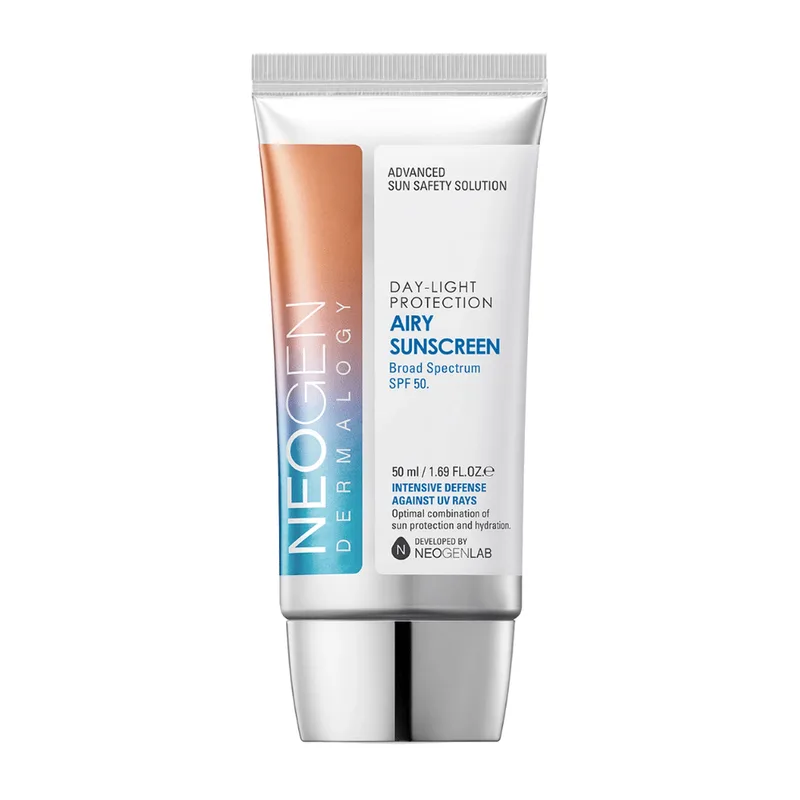
Dermalogy Day-Light Protection Airy Sunscreen
A antioxidant-rich sunscreen by Neogen, built around 12 antioxidant-rich ingredients.
48 of 48 ingredients identified
Informational only — check the packaging and a professional for advice.
Contains fragrance
Fragrance is a common trigger for sensitivity and irritation in reactive skin.
Category breakdown
Antioxidant · 12Soothing · 9Fragrance · 8Solvent / vehicle · 5Other · 5UV filter · 3Humectant · 3Surfactant · 1Preservative · 1Emollient · 1
Relationships
Full ingredient breakdown
2
A chemical UV filter often used to stabilize avobenzone.
3
A classic UVB-absorbing chemical sunscreen filter commonly used to dissolve and stabilize other filters.
7
A chemical filter that provides UVA protection.
13
The stable ester form of vitamin E that converts to active tocopherol in skin; a common, shelf-stable antioxidant.
14
Extract from the rhizome of Coptis japonica (Japanese goldthread). Rich in berberine and other isoquinoline alkaloids with potent anti-inflammatory, antimicrobial, and antioxidant properties. Used in traditional Japanese and Chinese medicine.
22
An antimicrobial tea tree essential oil used for blemish-prone skin that can irritate or sensitize.
28
An extract from evening primrose flowers with antioxidant and anti-inflammatory properties, distinct from the GLA-rich seed oil.
29
An extract from the leaves of Pinus palustris (longleaf pine), used in cosmetics as an antioxidant and skin conditioning agent.
30
A root extract from the David's elm tree (Ulmus davidiana), a K-beauty botanical valued for its soothing, antioxidant, and hydrating properties.
31
An isoflavone-rich kudzu root extract that provides antioxidant protection and soothes skin.
32
Aqueous extract from lemon (Citrus limonum) fruit. Contains ascorbic acid, hesperidin, and citrus flavonoids. Provides antioxidant and brightening activity in cosmetics.
33
A gold-standard humectant that draws water into the skin.
34
A general extract (water or hydroalcoholic) of Damask rose (Rosa damascena) petals or plant material, used for soothing and antioxidant benefits; distinct from the specific flower extract, essential oil, and distilled flower water.
35
Leaf extract from Lippia citriodora (lemon verbena). Contains verbascoside, luteolin, and other polyphenols with documented antioxidant and anti-inflammatory activity. Used in sunscreens and K-beauty products for its photoprotective support and refreshing botanical profile.
36
Extract from the leaves of Adansonia digitata (baobab tree). Distinct from baobab seed oil — the leaf extract provides a concentrated source of antioxidant polyphenols (quercetin, kaempferol, rutin) and vitamin C. Used in K-beauty sunscreens and botanical-rich formulas.
37
An extract from the fruit of Rubus idaeus (red raspberry), distinct from the leaf extract, valued for its high antioxidant content including ellagic acid, vitamin C, and anthocyanins that protect and condition the skin.
38
An extract of purslane traditionally used to calm and soothe reactive skin.
39
An extract from the lowbush blueberry (Vaccinium angustifolium) fruit rich in anthocyanins, flavonoids, and vitamin C that provides antioxidant protection and skin-soothing benefits.
40
An extract of yarrow (Achillea millefolium) flowers, traditionally used to calm redness and irritation due to its flavonoid content and anti-inflammatory properties.
41
An extract of arnica flowers used in cosmetics at low concentrations to soothe redness and irritation, with known sensitization risk in those with Compositae plant allergies.
42
A dry extract of aloe vera leaves used to calm and hydrate skin, distinct from aloe leaf juice in processing and concentration.
43
An extract from Artemisia capillaris (capillary wormwood / Inchinko), a traditional Korean medicinal herb, distinct from the Artemisia Capillaris Powder form, used for soothing, antioxidant, and calming benefits in K-beauty formulations.
44
An extract from the fruit of Euterpe oleracea (acai palm), rich in anthocyanins, flavonoids, and fatty acids that provide strong antioxidant and anti-inflammatory activity.
45
An extract from Phellinus linteus (meshimakobu), a bracket mushroom used in East Asian traditional medicine, valued in cosmetics for its polyphenol and beta-glucan content, which confer antioxidant and anti-inflammatory effects.
46
The salt form of hyaluronic acid; penetrates more readily.
47
An extract from hibiscus flowers rich in anthocyanins, citric, and malic acids with antioxidant, brightening, and mild exfoliating properties.
48
A polysaccharide humectant that hydrates and calms; often compared to hyaluronic acid.