
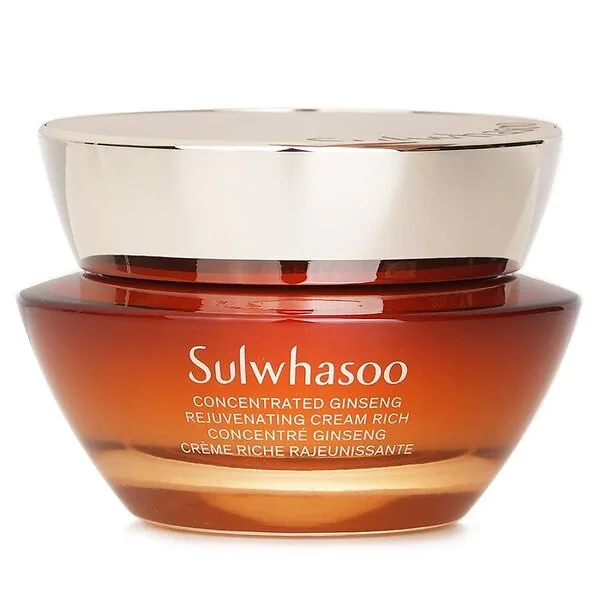
Sulwhasoo
Concentrated Ginseng Renewing Cream EX
A nourishing moisturizer by Sulwhasoo — featuring Pantethine (antioxidant via disulfide bond…) and Acetyl Glucosamine (brightens).
80 of 80 ingredients identified
Informational only — check the packaging and a professional for advice.
Actives combined with exfoliation
This formula pairs active ingredients with exfoliation. Introduce gradually and watch for sensitivity.
1 potential ingredient conflict
Salicylic Acid + Retinol.
Barrier-support ingredients present
Glycine Soja (Soybean) Sterols, Phytosphingosine help reinforce the skin barrier.
Contains fragrance
Fragrance is a common trigger for sensitivity and irritation in reactive skin.
Category breakdown
Emollient · 26Antioxidant · 8Other · 8Humectant · 7Solvent / vehicle · 6Surfactant · 6Active · 5Fragrance · 5Soothing · 4Preservative · 2Barrier support · 2Exfoliant · 1
Relationships
Works well together
Squalane + RetinolPhytosteryl Isostearyl Dimer Dilinoleate + SqualaneOctyldodecyl Myristate + DimethiconeOctyldodecyl Myristate + GlycerinHelianthus Annuus (Sunflower) Seed Oil + TocopherolHydrogenated Oil + GlycerinCaffeic Acid + TocopherolTocopheryl Linoleate + TocopherolTocopheryl Linoleate + SqualaneTocopheryl Linoleate + Sodium HyaluronateVitis Vinifera (Grape) Leaf Extract + TocopherolSodium Hyaluronate + GlycerinMethoxy PEG-114/Polyepsilon Caprolactone + GlycerinMethoxy PEG-114/Polyepsilon Caprolactone + DimethiconePanax Ginseng Flower Extract + Panax Ginseng Root ExtractPanax Ginseng Flower Extract + Hydrolyzed Ginseng SaponinsHydrolyzed Ginseng Saponins + Panax Ginseng Root ExtractHydrolyzed Ginseng Saponins + Sodium HyaluronateAlpha-Isomethyl Ionone + Linalool
Potential conflicts
Salicylic Acid + Retinol
Full ingredient breakdown
1
A revered K-beauty botanical used for antioxidant, brightening and revitalizing effects.
3
A gold-standard humectant that draws water into the skin.
7
A sugar-based humectant that holds water and helps skin resist dehydration stress.
15
An extract from the root of Glycyrrhiza uralensis (Chinese licorice), a species distinct from G. glabra (western licorice), containing glycyrrhizin, glycyrrhetinic acid, and flavonoids with anti-inflammatory and brightening effects.
29
A dimeric form of pantetheine and intermediate in Coenzyme A synthesis that provides antioxidant protection, inhibits tyrosinase activity for brightening, and supports skin cell metabolism and regeneration.
33
Phytosterols extracted from soybean that reinforce the skin lipid barrier and condition the skin surface.
37
Vitamin E; a lipid-soluble antioxidant that also conditions skin.
38
An amino-sugar (a hyaluronic acid building block) that helps fade uneven pigmentation and supports skin hydration. Pairs well with niacinamide for tone.
40
An oil-soluble BHA that exfoliates inside the pore.
43
An extract from the flowers of the sacred lotus (Nelumbo nucifera) rich in flavonoids and tannins with antioxidant, soothing, and mild brightening properties.
44
An extract from the rhizome or root of Polygonatum officinale (Solomon's seal / Yuzhu), a TCM tonic herb; rich in polysaccharides and flavonoids that provide humectant, antioxidant, and skin-conditioning benefits.
45
An extract from the root of Rehmannia chinensis (Chinese foxglove), one of the 50 fundamental herbs in TCM. Contains iridoid glycosides, oligosaccharides, and amino acids used for skin conditioning and antioxidant support in Japanese prestige skincare.
46
An extract from the root of Paeonia albiflora (white peony / Bai Shao), a traditional East Asian botanical distinct from tree peony, used for its soothing, brightening, and antioxidant effects.
47
An extract from the bulb of Lilium candidum (Madonna lily) containing polysaccharides and flavonoids, used to soothe and condition skin.
49
A naturally occurring hydroxycinnamic acid found in coffee, wine, and many plants; potent antioxidant used in prestige creams for its UV-protective, anti-inflammatory, and brightening polyphenol activity.
50
Tocopheryl Linoleate is an ester formed from tocopherol (vitamin E) and linoleic acid (omega-6, C18:2). It combines the antioxidant functionality of vitamin E with the barrier-repair properties of linoleic acid in a more stable form than either free ingredient. Upon skin application, skin esterases hydrolyze the ester bond to release free tocopherol and linoleic acid. Used in premium creams and serums as an antioxidant emollient with a favorable essential fatty acid profile.
55
An extract from the fruit of Gardenia florida (Cape jasmine) containing crocin and other antioxidant polyphenols that protect skin from oxidative stress.
56
Extract from Vitis vinifera (grapevine) leaves; distinct INCI from grape seed or fruit extract. The leaf fraction is notably rich in proanthocyanidins and quercetin glycosides for antioxidant and firming benefits.
61
A natural humectant that hydrates, soothes and conditions skin with mild antimicrobial activity.
62
A polysaccharide humectant that hydrates and calms; often compared to hyaluronic acid.
64
An extract from the seeds of Perilla ocymoides (perilla/shiso) rich in alpha-linolenic acid derivatives and antioxidant polyphenols, used for soothing and skin-conditioning benefits.
66
A vitamin A derivative that accelerates cell turnover.
67
The salt form of hyaluronic acid; penetrates more readily.
68
A precursor lipid that supports barrier function and has soothing properties.
71
Panax Ginseng Flower Extract is derived from the flowers of the ginseng plant, a distinct botanical part with a unique ginsenoside profile compared to the root (the most commonly used part). Flower extracts are enriched in specific saponins and polyphenolic antioxidants that provide skin-brightening and anti-aging benefits. Used in premium Korean beauty products as part of multi-part ginseng complexes (root + flower + seed + berry).
74
Hydrolyzed Ginseng Saponins are produced by enzymatic or acid hydrolysis of the triterpene saponins (ginsenosides) present in Panax ginseng root. The hydrolysis cleaves sugar moieties, yielding smaller aglycone and protopanaxadiol/protopanaxatriol metabolites (including Rh1, Rh2, Rg3, compound K) that have improved skin penetration versus intact high-molecular-weight saponins. Used in premium Korean skincare as a high-potency, bioavailable form of ginseng active.
79
A biodegradable polyamino acid polymer (poly-aspartic acid sodium salt) used as a high-performance humectant and film-former that provides sustained surface hydration.