
The History of Whoo
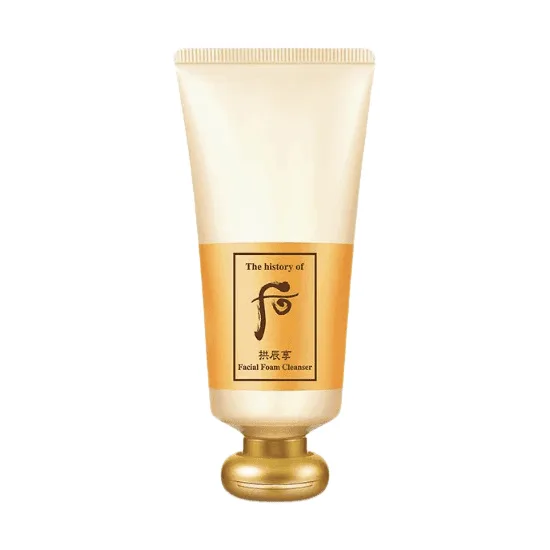
Gongjinhyang Facial Foam Cleanser
A antioxidant-rich cleanser by The History of Whoo — featuring Octadecenedioic Acid (a c18 long-chain dicarboxylic…) and Velvet Extract (supports skin firmness).
51 of 51 ingredients identified
Informational only — check the packaging and a professional for advice.
Barrier-support ingredients present
Bletilla Striata Root Extract help reinforce the skin barrier.
Contains fragrance
Fragrance is a common trigger for sensitivity and irritation in reactive skin.
Category breakdown
Antioxidant · 17Soothing · 13Other · 7Emollient · 4Fragrance · 2Active · 2Solvent / vehicle · 1Preservative · 1Surfactant · 1UV filter · 1Barrier support · 1Humectant · 1
Relationships
Works well together
Talc + DimethiconeTalc + SilicaPoria Cocos Extract + Panax Ginseng Root ExtractGinkgo Biloba Nut Extract + Panax Ginseng Root ExtractChrysanthellum Indicum Extract + Chrysanthemum Indicum ExtractZizyphus Jujuba Fruit Extract + Panax Ginseng Root Extract
Full ingredient breakdown
5
An extract of Chrysanthemum indicum flowers rich in luteolin and apigenin flavonoids, used in Japanese skincare for soothing, anti-inflammatory, and antioxidant properties. Distinct from Chrysanthemum parthenium (feverfew).
7
The stearyl ester of glycyrrhetinic acid — a lipid-soluble licorice derivative used in Korean hanbang and sensitive-skin formulas for its potent, well-tolerated anti-inflammatory activity.
12
A naturally occurring flavonoid (methoxylated luteolin) found in citrus peel and lotus; used in prestige skincare as an antioxidant and anti-inflammatory active.
13
A naturally derived dicarboxylic acid (C18 unsaturated) produced by bioconversion of oleic acid; used in premium skincare as a mild skin-brightening and antimicrobial active.
16
A mineral UV filter effective against UVB and short UVA.
19
Extract from dried clove flower buds (Syzygium aromaticum); one of the most antioxidant-rich botanical extracts in cosmetics, used in hanbang formulas for its bioactive eugenol and phenolic acids.
21
Extract from the root of Nardostachys chinensis (Chinese spikenard), a Himalayan herb used in East Asian medicine; found in prestige Korean hanbang formulas for its calming, skin-soothing sesquiterpene content.
23
Extract from the peel of Citrus nobilis (Mandarin orange). Contains polymethoxylated flavones (PMFs), hesperidin, and limonene. Used for antioxidant protection and mild brightening. Distinct from Citrus Reticulata and Citrus Sinensis in its flavone profile.
24
Extract from fennel (Foeniculum vulgare), rich in anethole, flavonoids, and phenolic compounds. Used for its soothing, antioxidant, and skin-conditioning properties.
25
Extract from Agastache rugosa (Korean mint / baechu-hyang), a native Korean aromatic herb; used in hanbang skincare for its soothing, anti-inflammatory rosmarinic acid and antimicrobial essential oils.
26
Extract from Poria cocos (fu ling / wolfiporia extensa), a medicinal fungus widely used in traditional Korean and Chinese medicine; provides beta-glucans for antioxidant and calming effects in prestige hanbang skincare.
27
Bletilla striata (Bai Ji) is a terrestrial orchid native to East Asia whose dried tubers have been used for centuries in Traditional Chinese Medicine to stop bleeding and promote tissue healing. The root extract is valued in premium K-beauty formulations for its high polysaccharide content — primarily glucomannans — delivering both film-forming humectancy and meaningful barrier repair, supported by pharmacological research confirming fibroblast activity stimulation.
28
An extract from the root of Paeonia albiflora (white peony / Bai Shao), a traditional East Asian botanical distinct from tree peony, used for its soothing, brightening, and antioxidant effects.
29
Extract from the nut of Ginkgo biloba (maidenhair tree); distinct INCI from the more common leaf extract. Used in Korean hanbang formulas alongside other traditional herbal ingredients.
30
A revered K-beauty botanical used for antioxidant, brightening and revitalizing effects.
31
An extract from the rhizome of Atractylodes japonica, a TCM/TKM botanical related to A. macrocephala (Baizhu); contains sesquiterpenes (atractylone, atractylodin) with anti-inflammatory and skin-conditioning benefits.
33
Extract from the root of Ampelopsis japonica (Japanese porcelain berry), used in East Asian herbal medicine; provides stilbenoid antioxidants in Korean hanbang prestige skincare.
34
An extract from the flowers of Lilium candidum (Madonna lily). Contains flavonoids and phenolic glycosides that provide antioxidant and soothing benefits. Distinct from the Lilium Candidum Bulb Extract which is already in the KB.
35
An extract from the fruit of Prunus mume (ume / Japanese plum or apricot), a plant central to Japanese traditional beauty practices, valued for its antioxidant polyphenols and organic acids that contribute brightening and conditioning effects.
36
Extract from Chrysanthemum sinense (Chinese chrysanthemum / ju hua); used in Korean hanbang formulas for its cooling, soothing, and antioxidant polyphenols.
37
Extract derived from pre-ossified deer antler (velvet antler), the fastest-growing mammalian tissue known. Contains collagen, glycosaminoglycans, IGF-1, EGF, and other growth factors. Enzymatically digested velvet antler peptides have been shown to accelerate healing, reduce scar formation, and improve collagen fiber organization via TGF-β/Smad2 pathway modulation. Used in K-beauty essences for anti-aging and matrix-nourishing properties.
38
An antioxidant-rich cornelian cherry extract that helps defend skin against free-radical damage.
39
Extract from the combined flowers and leaves of Thymus vulgaris (common thyme); distinct INCI from the leaf-only extract, providing a richer bioactive profile from both plant organs.
40
A Japanese angelica root extract that soothes skin and offers antioxidant support.
41
An extract from persimmon (Diospyros kaki) leaves rich in triterpenoids, tannins, and ursolic acid, used in K-beauty products for antioxidant, soothing, and mild brightening effects.
42
An extract of the bark of Chinese cinnamon (Cinnamomum cassia, CAS 84961-46-6), containing cinnamaldehyde, eugenol, and polyphenols; used in skincare for antioxidant and antimicrobial properties but requires caution due to sensitization potential from fragrance-active constituents.
43
An extract from Japanese mugwort (Artemisia princeps) leaves, known as yomogi in Japan. Rich in flavonoids, chlorogenic acid, and terpenoids; used in Japanese skincare for soothing, antioxidant, and anti-inflammatory properties.
44
An extract from Chrysanthellum indicum, a small daisy-family herb distinct from the chrysanthemum flower. Rich in flavonoids and saponins; provides antioxidant and soothing benefits in luxury cream formulas.
45
Extract from the fruit of Chaenomeles sinensis (Chinese quince / mogwa), a traditional East Asian medicinal fruit; provides antioxidant organic acids and polyphenols in hanbang skincare.
46
A polyphenol-rich antioxidant that also calms skin.
47
Extract from lychee (Litchi chinensis) fruit; provides oligonol polyphenols and ascorbic acid precursors for antioxidant protection and skin brightening in Korean prestige formulas.
48
An extract from the fruit of Zizyphus jujuba (jujube / Chinese date). Contains cAMP, betulinic acid, and polysaccharides that provide soothing, antioxidant, and moisturising benefits in luxury Japanese and Chinese skincare.
49
An extract from the root of Dioscorea japonica (Japanese wild yam), used in cosmetics for its skin-conditioning and soothing properties.
50
An extract from the rhizome or root of Polygonatum officinale (Solomon's seal / Yuzhu), a TCM tonic herb; rich in polysaccharides and flavonoids that provide humectant, antioxidant, and skin-conditioning benefits.
51
Extract from Dimocarpus longan (longan/dragon eye fruit), a tropical fruit used in East Asian herbal medicine; provides antioxidant polysaccharides in Korean hanbang formulas.