
Some By Mi
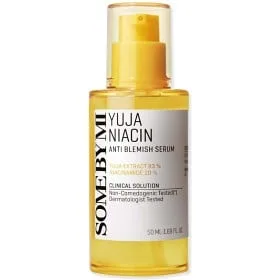
Yuja Niacin Blemish Care Serum
A antioxidant-rich serum by Some By Mi — featuring Niacinamide (reduces redness) and Adenosine (helps smooth fine lines).
45 of 45 ingredients identified
Informational only — check the packaging and a professional for advice.
Contains fragrance
Fragrance is a common trigger for sensitivity and irritation in reactive skin.
Category breakdown
Antioxidant · 9Active · 9Soothing · 5Humectant · 5Emollient · 4Other · 4Solvent / vehicle · 3Fragrance · 3Surfactant · 2Preservative · 1
Relationships
Works well together
Citrus Junos Fruit Extract + 2-O-Ethyl Ascorbic AcidCitrus Junos Fruit Extract + NiacinamideAdenosine + NiacinamideRice Bran Extract + TocopherolRice Bran Extract + Niacinamide2-O-Ethyl Ascorbic Acid + Niacinamide2-O-Ethyl Ascorbic Acid + TocopherolMorus Alba Fruit Extract + NiacinamideMorus Alba Fruit Extract + TocopherolGinkgo Biloba Leaf Extract + TocopherolGinkgo Biloba Leaf Extract + NiacinamideBeta-Carotene + Tocopherol
Full ingredient breakdown
1
Aqueous or glycolic extract from the yuzu fruit (Citrus junos), a Japanese citrus valued in skincare for its high vitamin C precursor content, flavonoids, and aromatic compounds. Antioxidant and mild brightening action.
2
A versatile vitamin B3 derivative with multiple benefits.
6
A chamomile-derived soothing agent.
8
A naturally occurring amino acid that acts as a humectant and supports the skin's own moisture-retention system.
12
A nucleoside used at low concentrations to help smooth the look of fine lines; a common K-beauty anti-aging active.
14
Neem flower extract used to soothe and condition the skin.
15
An extract of holy basil (tulsi) leaves rich in antioxidant and soothing compounds.
16
A botanical that soothes and gently brightens.
18
An extract of turmeric root rich in curcumin, offering antioxidant and soothing benefits.
20
A mineral-rich red algae extract used to hydrate and condition the skin.
21
A gold-standard humectant that draws water into the skin.
23
Extract from the root of Althaea officinalis (marshmallow plant). Rich in mucilaginous polysaccharides that form a protective, soothing film on skin. Traditionally used for its demulcent and anti-inflammatory properties. Used in Kanebo's sensitive formulations.
24
Extract from rice bran (the outer layer of the rice grain). Rich in ferulic acid, oryzanol (a mixture of phytosterol ferulates), tocotrienols, and ceramide precursors. A core Japanese beauty ingredient with antioxidant and mild brightening properties.
25
An ether derivative of L-ascorbic acid in which the 3-OH position is protected by an ethyl group, making it stable in water-based formulas. Converts to Vitamin C inside skin cells. Used widely in Japanese brightening products (Shiseido, Elixir) as a quasi-drug-adjacent brightening active.
27
An extract from the fruit of the common fig (Ficus carica) used for its humectant and antioxidant properties, contributing to skin softness and hydration.
28
An extract from the fruit of pomegranate (Punica granatum), rich in ellagitannins, punicalagins, and anthocyanins, used in cosmetics for antioxidant, brightening, and soothing benefits.
29
Morus Alba Fruit Extract is derived from the fruit of white mulberry (Morus alba), distinct from the root extract (which is used primarily for tyrosinase inhibition and brightening). The fruit is particularly rich in anthocyanins, resveratrol-related stilbenes, quercetin, and vitamin C. In cosmetics it provides antioxidant protection and mild brightening contribution via polyphenolic radical scavenging rather than the direct melanogenesis inhibition of the root extract.
30
A flavonoid-rich ginkgo leaf extract that provides antioxidant protection and soothes skin.
31
Vitamin E; a lipid-soluble antioxidant that also conditions skin.
33
Pro-vitamin B5 that soothes and hydrates.
34
A stable, water-soluble vitamin C derivative gentle enough for acne-prone skin.
36
Vitamin B9 (pteroylglutamic acid) used in cosmetics as an antioxidant and skin-conditioning agent that supports cellular renewal.
37
The free alcohol form of vitamin B6, used in cosmetics as a skin-conditioning agent with noted sebum-regulating and anti-acne properties, distinct from pyridoxine HCl (the hydrochloride salt form).
38
The synthetic, stable form of vitamin B12, used in cosmetics for its antioxidant and skin-conditioning properties; studies suggest topical B12 can reduce eczema symptoms and support skin barrier recovery.
39
Vitamin B2, a yellow flavin compound and essential coenzyme for cellular energy metabolism and antioxidant defense; used in cosmetics as a skin-conditioning agent and pigment (imparts yellow color at higher concentrations).
40
A carotenoid pigment found in carrots, algae, and other plants. Functions as an antioxidant and as provitamin A (converts to retinol in the body). In skincare, also used as a colorant and antioxidant booster.
41
A naturally occurring cyclohexane polyol (commonly myo-inositol) found in cell membranes, used in cosmetics as a humectant and skin-conditioning agent.
42
The hydrochloride salt form of thiamine (vitamin B1), used in cosmetics as a skin-conditioning and antioxidant active; chemically distinct from the free-base Thiamine INCI and provides improved stability and solubility.